Pans
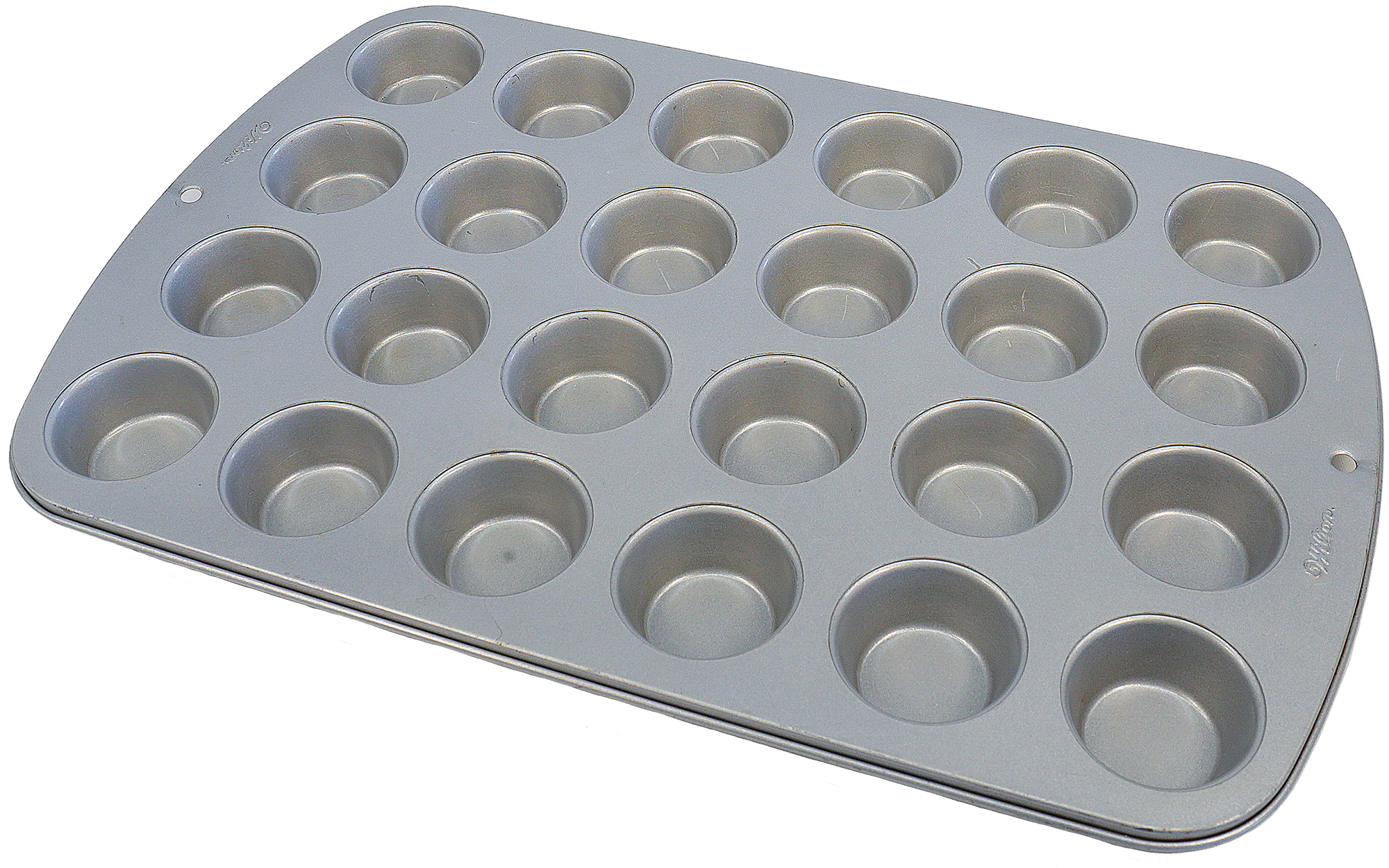 Muffins and cupcakes are baked in a muffin pan or tin made of steel, aluminum or cast iron. Make sure the pan you buy has rounded corners and seamless cups. Non-stick surfaces are available which enables easy removal of the muffins from the pan. Each pan can have 6-, 12- or 24- cup-shaped depressions and range from mini- to jumbo in size.
 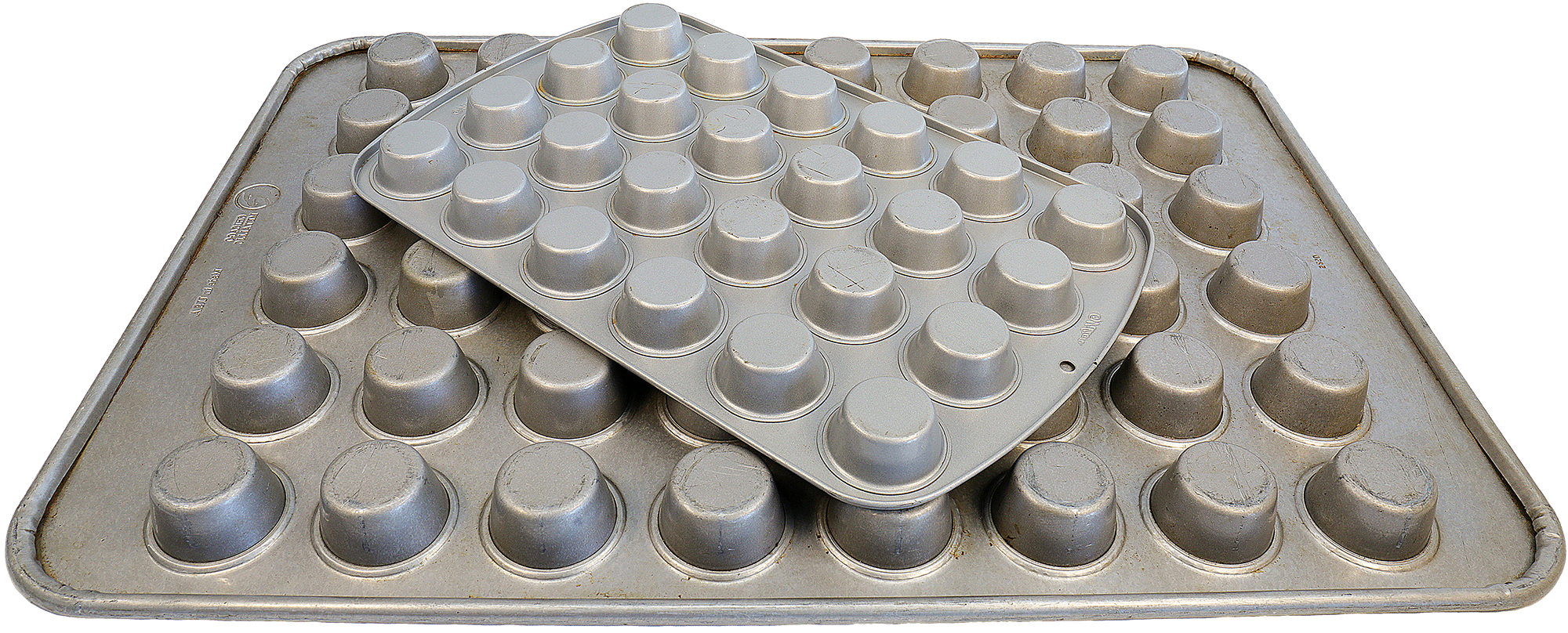 Mini muffin pans usually have 12 or 24 cup-shaped depressions. Each little cup is about 2 inches (5 cm) in diameter and 1/2 inch (1.25 cm) deep and holds about 2 tablespoons of batter. The regular size muffin pans have 6- or 12- cup-shaped depressions with each cup about 3 inches (7.5 cm) in diameter and holds about 1/2 cup or 4 ounces of batter. Jumbo muffin pans have 6 cup-shaped depressions with each cup being 4 inches (10 cm) in diameter and 2 inches (5 cm) deep holding about 1 cup of batter each.
There are also fluted muffin pans that come in 6- and 12- cup sizes made from heavy cast aluminum. Each of the 6 fluted muffin cups measures 4 inches (10 cm) wide and 2 inches (5 cm) deep and holds 8 ounces (240 ml) of batter. Each of the 12 fluted muffin cups measures 2 1/2 inches wide (6.25 cm) and 1 inch (2.54 cm) deep. They can be used to bake both muffins and cakes when decorative individual cakes are desired.
Note: If using a dark colored pan, reduce the oven temperature, stated in the recipe, by 25°F. (This is because dark colored pans absorb more of the energy coming from the oven walls so they become hotter and transmit heat faster than light colored pans.)
Paper or foil muffin cup liners are sometimes used to line the muffin pans. The advantage of paper liners is not only does it make clean-up easier but they also help to keep the muffins moist and help prevent them from drying out. However, if you like your muffins to have a crust, do not use paper liners. Instead, spray the muffin pan with a nonstick vegetable spray.