Basic Foams: Whipped Cream and Meringue
Whipped Cream
Cream is fat that rises to the top of whole milk. It has a smooth, satiny texture labeled according to its butterfat content (heavy to light). Creams can be labeled "pasteurized" or "ultra-pasteurized". Ultra-pasteurized creams have a longer shelf life than pasteurized creams, but taste is affected (some say it has a cooked flavor). For superior taste, although it can be hard to find, buy 'pasteurized' not 'ultra-pasteurized' cream.
- Heavy cream or heavy "whipping" cream has 36 - 40% butterfat and when whipped it holds its form and doubles in volume. Heavy cream is used for filling and decorating pastries.
- Whipping cream has a butterfat content of 30%. It whips, but not as well as heavy cream, and will not hold its form long. Whipping cream is good for fillings but does not hold up well for piping.
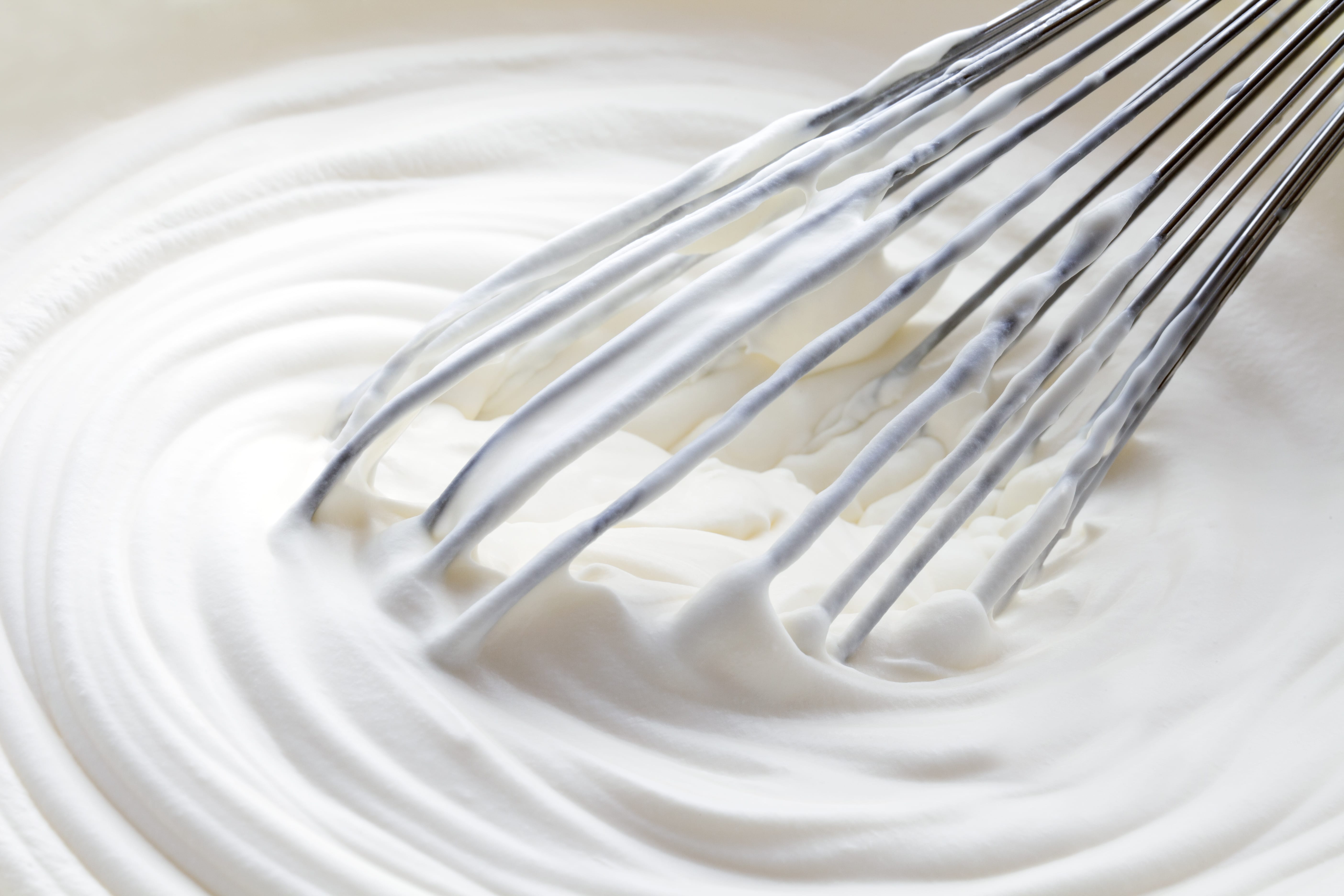
Guidelines for Whipping Cream
- Chill the cream, the bowl, and the wire whisk, as this will help the cream reach its maximum volume when whipped.
- It is best to use a metal bowl and place it in the freezer, along with the wire whisk, for at least 15 minutes.
- Use heavy cream, also known as heavy "whipping" cream (outside the U.S. it may have a different name). This is cream with a butterfat content of between 35 - 40%, which means it will double in volume and reach stiff peaks when whipped.
- To whip the cream, add it to the cold bowl, along with the vanilla and sugar.
- Start the mixer at low speed and gradually increase the speed to high. Depending on what you are using the cream for, whip just until soft or stiff peaks form.
- Watch carefully, because it is very easy to whip the cream until it almost turns to butter. If you do accidentally over whip, just add a little more cream and whip until soft or stiff peaks form.
- If you store the whipped cream in the refrigerator, you will find that it eventually separates. If that happens, simply rewhip.
- To stabilize the cream so it will not separate when stored, take about 1 teaspoon unflavored gelatin and sprinkle it over 1 tablespoon cold water. Let it stand about 5-10 minutes or until it has softened and swelled (bloom). Then heat it gently (in the microwave in 5 second intervals) to dissolve the gelatin. Then whisk it into the softly whipped cream.
Meringues
Meringues are egg whites sweetened with sugar. For example, meringues are used for pie toppings and cake icings, as well as providing volume and lightness to buttercream, dessert soufflés, and mousses. The egg white is mostly protein. To get maximum volume when whipping egg whites, they should be at room temperature and your bowl and whisk should be clean and free of fat. Copper is the best type of bowl to use. If whites are over whipped, the protein molecules will lose their elasticity and the whites will become dry and flaky and will not hold as much air. This is due to a process called “weeping”, where water separates from the proteins. If this happens, add another white and whip again only until the whites are creamy and glossy. When adding whipped egg whites to your batter, always fold the whites into the heavier mixture, not vice versa. Fold gently and quickly so as not to deflate the mixture. Add the egg whites in three stages using a rubber spatula. Cut down and through the batter making sure not to over mix. A few unmixed parts are fine, as the most important thing is not to deflate the egg whites.
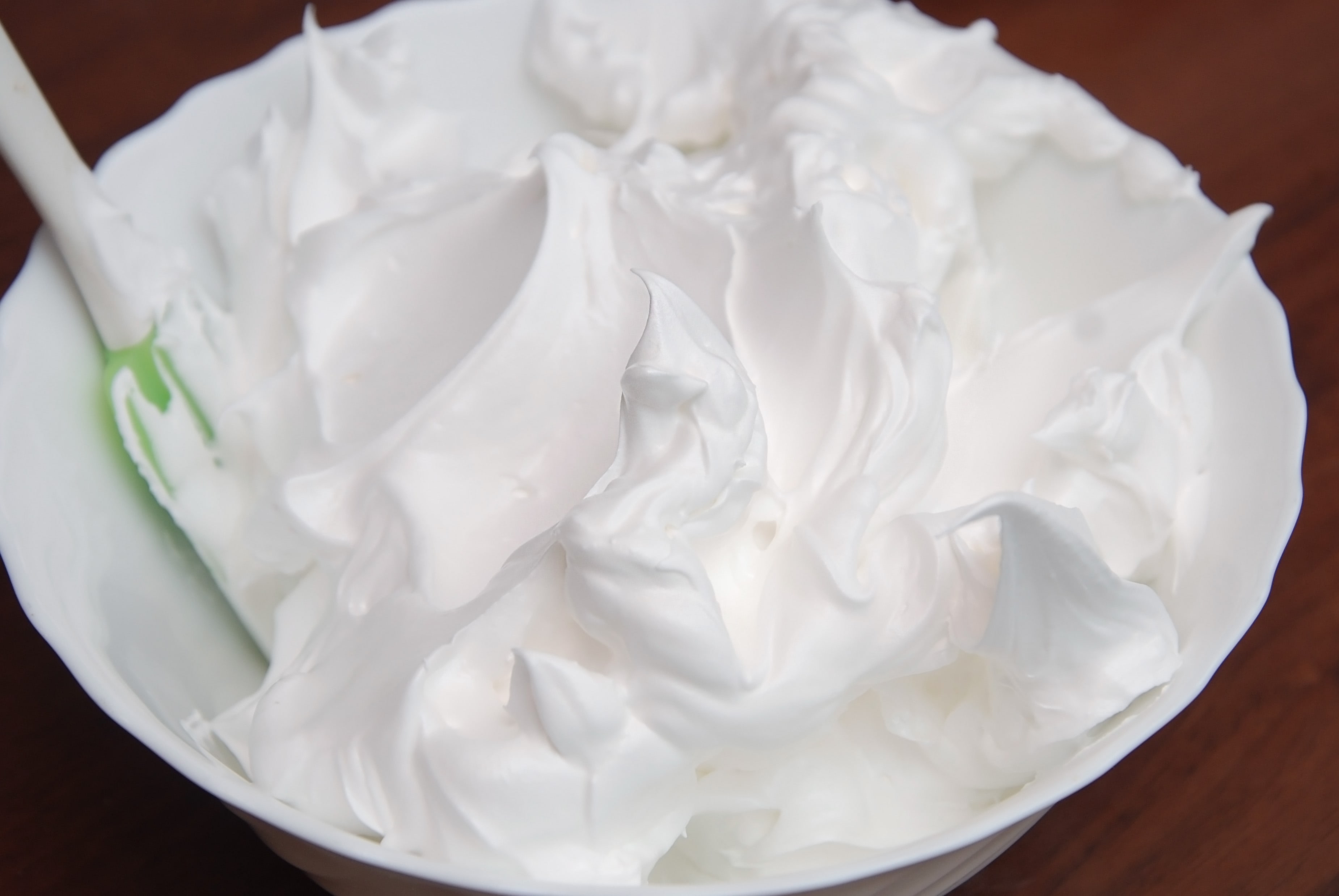
Two Types of Meringue: Soft and Hard
Soft meringue is made with only a small amount of sugar. The whites and sugar are whipped only to the soft peak stage and the meringue is then used as a topping for pies and cakes, puddings, mousses, and the famous Baked Alaska. The meringue is baked until the peaks are browned and the valleys lightly browned.
Hard meringue has a larger proportion of sugar to egg whites than a soft meringue. Hard meringues are whipped until stiff peaks form. The meringue is then placed in a piping bag and piped into various shapes; for example, a round shape with a depression in the center so the baked meringue can be filled with fruit, cream, custard, ice cream, or ganache.
Tips for Whipping Egg Whites
- The egg whites should be at room temperature and free of any specks of egg yolk. Separate eggs when cold and then warm egg whites to room temperature before using. Remove any yolk with the edge of the empty eggshell.
- The bowl and whisk are clean and free of fat to obtain maximum volume. A copper bowl is best for whipping whites as it reduces the time it takes to whip the whites. Stainless steel also does a good job of whipping and stabilizing the egg whites when used with cream of tartar and sugar. Do not use an aluminum bowl as some of the aluminum does come off during whipping and gives the whipped egg whites a grayish tinge. Plastic is not a good surface either as it attracts fat because of its porous surface.
- Superfine sugar makes for a smoother meringue as it is easier for the sugar to dissolve. To make your own, take granulated white sugar and process it in a food processor until very fine (about 30 seconds). Adding the sugar gradually to the egg whites ensures that the sugar completely dissolves and does not produce a gritty texture.
- Start whipping the egg whites at low speed, gradually increasing the speed to medium-high. If you start at high speed, the air bubbles created will be less stable as they are too large. Adding cream of tartar (1/8 teaspoon for each white) and sugar will help stabilize the whipped egg whites. Add the cream of tartar once the whites are foamy. Continue whipping the whites and once they have reached the soft peak stage, gradually add the sugar (this ensures that the sugar fully dissolves into the foam). Whip the egg whites until you have moist, stiff, shiny peaks when you raise the whisk. To test if the meringue is whipped properly, rub a little of the meringue between your thumb and index finger. It should be smooth, not gritty. If it feels gritty, the sugar has not fully dissolved so keep whipping until it feels smooth between your fingers.
- Have cream of tartar and sugar ready (if using a stainless-steel bowl). Cream of tartar is tartaric acid and is a fine white crystalline acid salt, a by-product of the wine making industry. It is used in the whipping of egg whites to stabilize them and allow them to reach maximum volume. Cream of tartar is found in the spice section of most grocery stores and should be stored in a cool dry place. Perfectly whipped egg whites produce a baked good that has good volume and texture. The foam needs to have a stable structure so it maintains its volume until the batter sets in the oven. Always use the whipped egg whites right away, as they start losing volume immediately. If you accidentally over-whip the egg whites, add one unwhipped white and whip again until stiff peaks form. Remove 1/4 cup of egg white.
- Hard meringues slow bake in an oven to allow moisture to evaporate out of the meringues slowly. If the oven temperature is too high, the outside of the meringue will dry and set too quickly. You will end up with a chewy and sticky interior, instead of dry, crisp and crunchy. You will also notice the outside of the meringue separates from the inside.
- If you prepare and bake meringues on a rainy or humid day, you will probably have to bake the meringues longer than on a dry day. If your meringue starts to brown, the oven temperature is too high causing the sugar to caramelize.
- To prevent cracking of the meringues, do not open the oven door during the first half to three quarters of the baking time.
Meringue Cookies Recipe - Joyofbaking.com