Eggs: Composition and Nutrition
Composition
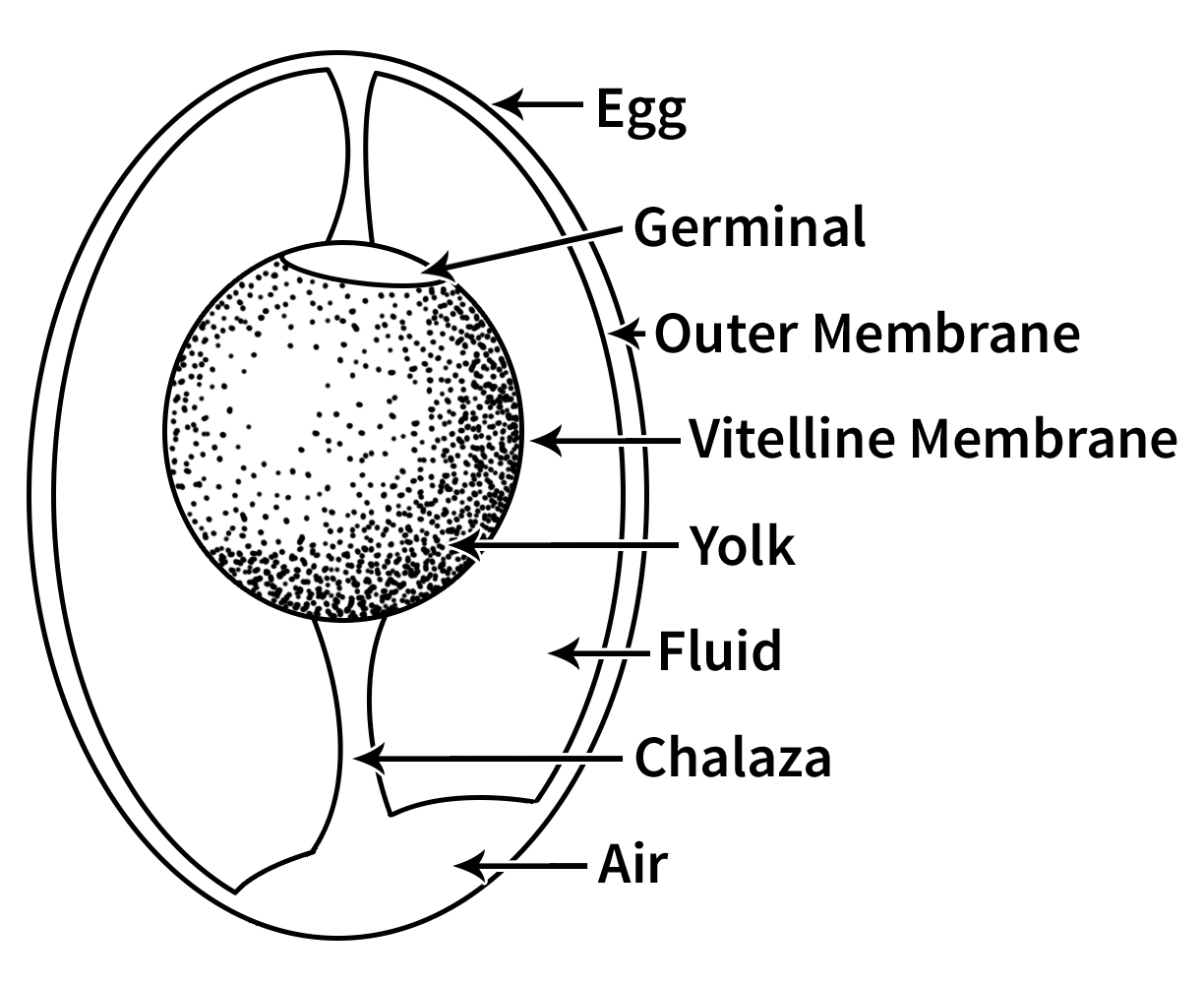
The three main components of eggs are the shell, the white, and the yolk. The average whole large egg, weighing 56 g (2 oz.) is composed of 12% shell, 58% white, and 30% yolk by weight. Protein is found in both the white and the yolk, but almost all of the fat is found in the yolk
Composition of Eggs by Percent of Weight
|
Component |
Whole Egg |
Yolk |
White |
|---|---|---|---|
|
Moisture |
73.0 |
49.0 |
86.0 |
|
Protein |
13.3 |
16.7 |
11.6 |
|
Lipid |
11.5 |
31.6 |
0.2 |
Note: traces of sugar and ash are also present in an egg.
Nutrition
Nutritional Content of a Large Egg
|
Element |
Whole Egg |
Yolk |
White |
|---|---|---|---|
|
Weight |
50 g |
17 g |
33 g |
|
Protein |
6 g |
3 g |
3 g |
|
Fat |
5 g |
5 g |
Trace |
|
Cholesterol |
216 mg |
216 mg |
0 |
|
Calcium |
25 mg |
2 mg |
27 mg |
|
Iron |
1.0 mg |
0.6 mg |
Trace |
|
Sodium |
63 mg |
7 mg |
54 mg |
|
Potassium |
60 mg |
16 mg |
47 mg |
|
Vitamin A |
96 RE |
99 RE |
0 RE |
Note: B-complex vitamins, not itemized, represented in eggs, are amino acids. “RE” stands for retinol equivalent, a term used in nutritional measurement.
The concentration of certain food elements in different parts of the egg is worth noting. For example, all the cholesterol is in the yolk. The yolk is relatively rich in iron and the white is high in calcium.
In practice, when separating large eggs, one estimates the weight of the white as 30 g (1 oz.) and the yolk as 20 g (0.7 oz.). The color of the shell, which is either a creamy white or brown, is relevant to the breed of the hen, and there is no other basic difference in the content of the egg or the shell.
The color of the yolk depends on the diet of the hens. Bakers prefer eggs with dark yolks. Certainly, the appearance of cakes made with such eggs is richer. Tests have found that, although eggs with darker yolks tend to produce moister sponge cakes, the cakes are somewhat coarser and less tender.