Vanilla
Pure vanilla, aromatic flavor, is a widely used flavoring in pastries, confections, and other desserts. It is the second most expensive spice in the world, next to saffron. Vanilla is sold in different forms: extract and essence, pods (beans), powdered, and vanilla sugar.
Vanilla begins with a celadon colored orchid, the only orchid of about 20,000 varieties that bears anything edible. Native only to Central America it took until the 19th century for botanists to figure out how it was grown commercially in other tropical climates. This orchid, in order to produce the vanilla pod (beans), must be pollinated by bees, (Melipona bees) or a species of the hummingbird. The second problem to commercial growers was that when the orchid flower opens, it does so for a very short time, less than a day. If the flower is not pollinated by the bees in that short time, it will fall off. Therefore, even though the bees were introduced to other tropical areas of the world, commercial growers could not depend on the bees pollinating all the open orchid flowers. It was not until "hand pollination" of the flowers was developed that vanilla could be successfully grown commercially.
Vanilla is the fruit of a thick green orchid vine (v. planifolia) that grows wild on the edge of the Mexican tropical forests. The vines, when grown wild, will grow up to the top of tall trees in the jungle. Commercially, the vines are pruned for a few reasons. One is that the vines will not flower until they stop growing. In addition, the vines need to be at a height where workers can reach them. Once the vines stop growing they produce clusters of buds that eventually develop into orchids, with up to 1000 flowers for one vine. Not all the flowers are hand pollinated though. They are thinned out to guarantee good quality beans, albeit fewer in quantity. After hand pollination, the flowers develop into long, thin green pods or beans that can grow up to 12 inches (30 cm) long. The average length of the bean is about 8 inches long. These tasteless and odorless green pods are handpicked when they are still not ripe and then the fermentation process begins. The beans are first plunged into hot water and then the 'drying' and 'sweating' process starts. The beans are dried in the sun: and then are wrapped in the blankets at night to sweat. This process can last anywhere from 2 to 6 months until the beans become a very dark brown color and develop a white crystalline substance (or frost) on the outside of the bean, called vanillin. The vanillin is what gives the beans their wonderful flavor and aroma and these beans are prized. At this point, the beans are aged to bring out their full flavor, and this can take up to two years. Once dried and cured the vanilla pods should be kept airtight to retain their wonderful flavor.
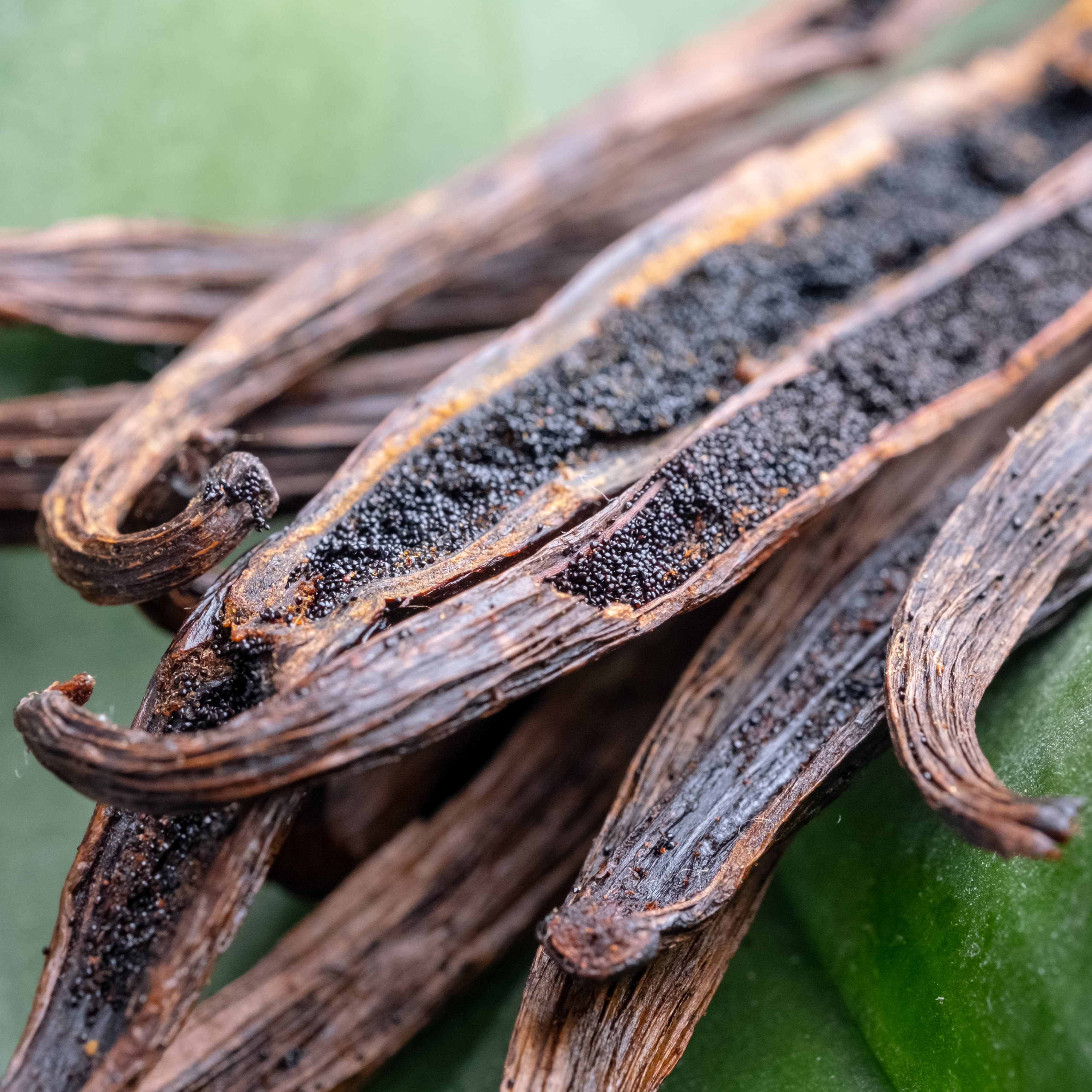
Today about 70 - 80% of the world's vanilla comes from the islands of Madagascar and Reunion in the Indian Ocean where the plants were first introduced around 1840. The Madagascar or Madagascar-Bourbon vanilla beans were referred to as "bourbon beans" because the French first planted the vine on the Isle de Bourbon. These beans have a smooth, rich, sweet flavor and are the thinnest of the vanilla beans grown.
The Mexican vanilla bean is a thicker and darker bean that has a smooth, strong, rich fragrance and flavor, some say they are the best. The one problem is that some manufacturers of vanilla products in Mexico add coumarin, banned by the FDA because it can cause liver and kidney damage. Always buy Mexican vanilla products from a reputable supplier.
Tahitian vanilla beans are the thickest of the three and almost black in color. They are not as flavorful as the other two but, are very aromatic with complex floral aromas, which make them popular in making perfumes.
Vanilla sugar is a vanilla bean added to white granulated sugar or confectioners (powdered or icing) sugar. Cut the bean in half, cover and bury in the sugar. After a week or two, allowing the vanilla to permeate through the sugar. Use the vanilla sugar in place of regular sugar to add the vanilla flavor to desserts.
Vanilla Powder is produced by grinding dried whole vanilla beans until powdery. The advantage of vanilla powder added to warm liquids is that vanilla flavor will not evaporate as it does with extracts. It is purchased in some specialty grocery stores or else by mail order.
Panna Cotta Recipe Demonstration - Joyofbaking.com