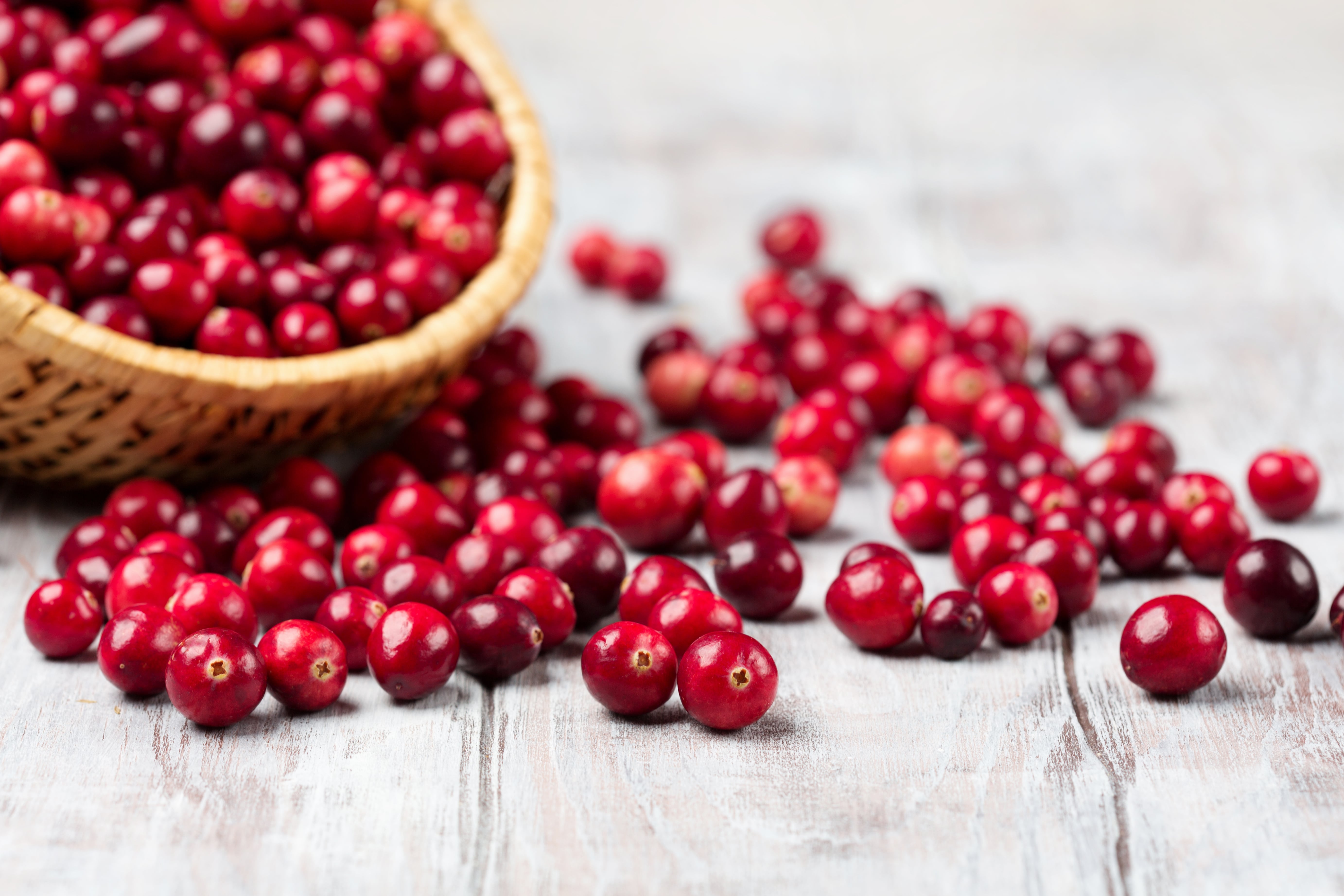
Cranberries
While some fresh fruits, like apples, enjoy year-round popularity, cranberries, seem to be associated mainly with a season or holiday. Cranberry ties date back to Thanksgiving (1621) when they were served alongside the wild turkey.
American Indians introduced the earliest settlers to this small, hard, smooth-skinned, shiny red, round to oval-shaped wild berry known by the names: craneberry, bounceberry, bearberry, cowberry, or lingonberry. The Indians used the cranberry as both a food and a medicine. Sailors as well as settlers traveling westward used cranberries, full of Vitamin C, as a way to ward off scurvy. On long sea voyages, to keep the cranberries fresh, the sailors would store the berries in barrels full of water.
Besides the Concord grape and blueberry, the cranberry is one of three fruits that are native to America. A fruit of a small shrub with trailing vines that likes cold climates. It grows best in poor acid soil in flooded areas called bogs or on moors or mountainsides. Although grown throughout the world, Northern Europe and North America best known for the cranberry. In North America, cultivated cranberries grown mainly in Massachusetts, Wisconsin, Washington and Oregon. They are found growing wild in bogs from Nova Scotia to North Carolina and westward to Michigan as far as the west coast of Oregon and Washington.