Measuring Cups
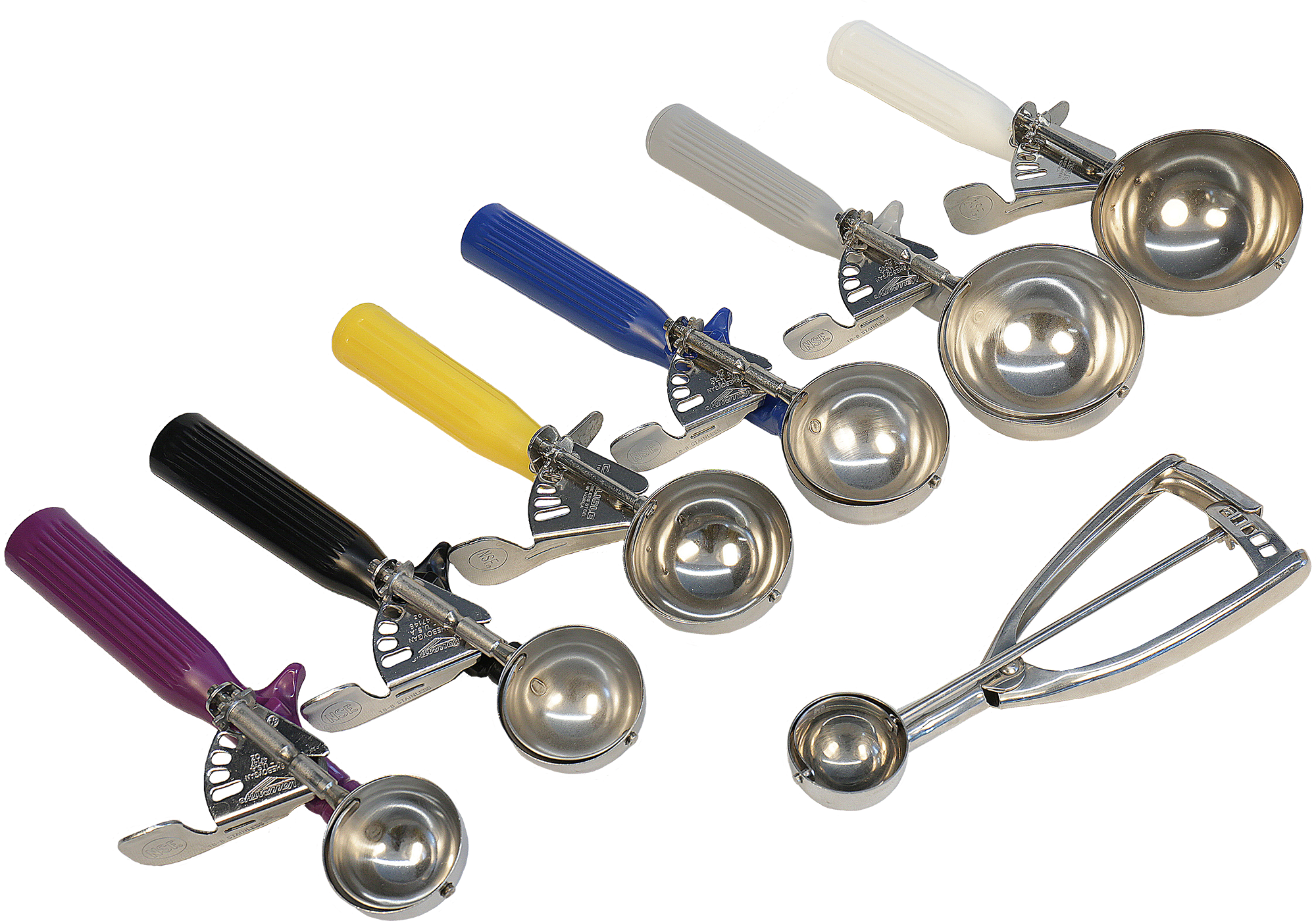
Measuring cups come in two types, liquid and dry. In nearly every instant these two should not be used interchangeably unless stated in the recipe. The general rules for this reason will be covered later, but for now these utensils are used to measure the volume of a liquid or bulk dry ingredient.
Liquid measuring
These come in various sizes. The liquid is poured into the cup even with the measurement line on the side of the cup. It is used to measure liquid ingredients by the ounce and fluid ounce. Notice that cups are printed on the containers but these are not interchangeable with the dry measurements. To take the most accurate measure, set the cup on a flat surface and read it so the measuring line is at eye level.
Dry measuring
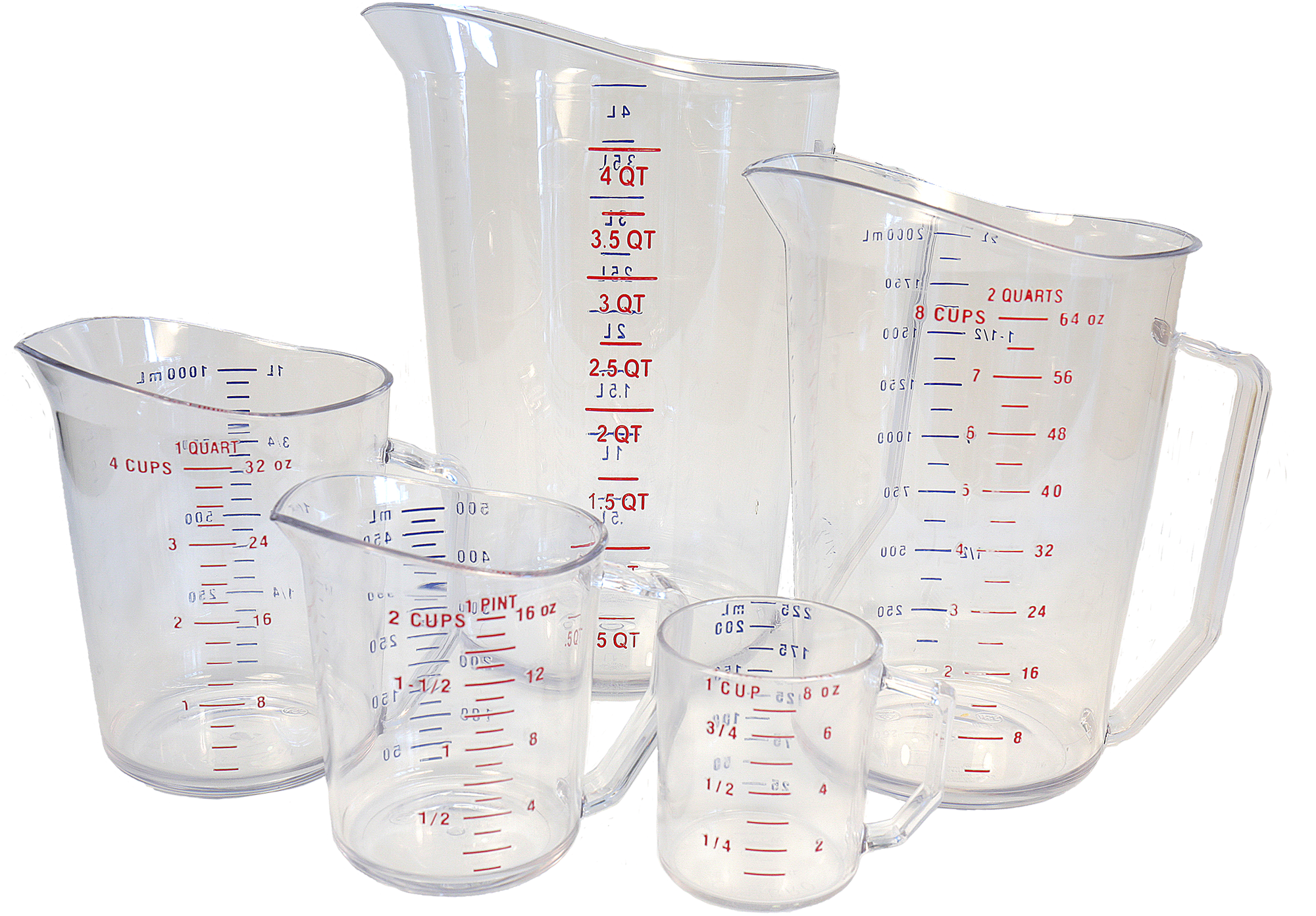
Rarely will you find these measuring units in sizes other than 1/4th (quarter), ½ (half), 1/3rd (a third) and 1 cup. Use these for ingredients such as flour, sugars, herbs and spices when a weight is not specifically mentioned in a recipe. To receive an accurate measure using a dry measure cup, fill the measure to the brim, and then sweep off the excess. Recall that 1 cup is equivalent to 8 ounces, however, as you will learn in a short time, this will depend on the specific gravity of the ingredients and only a limited amount of them is equal by weight and volume. There are many considerations when using a formula that is in volume. Was the dry ingredient scooped into the measuring cup or was it spooned into the measuring cup? Both will have much different weight causing inconsistencies every time you make your product. If you are unsure, then you will likely have to make the formula a couple times.
Ladles
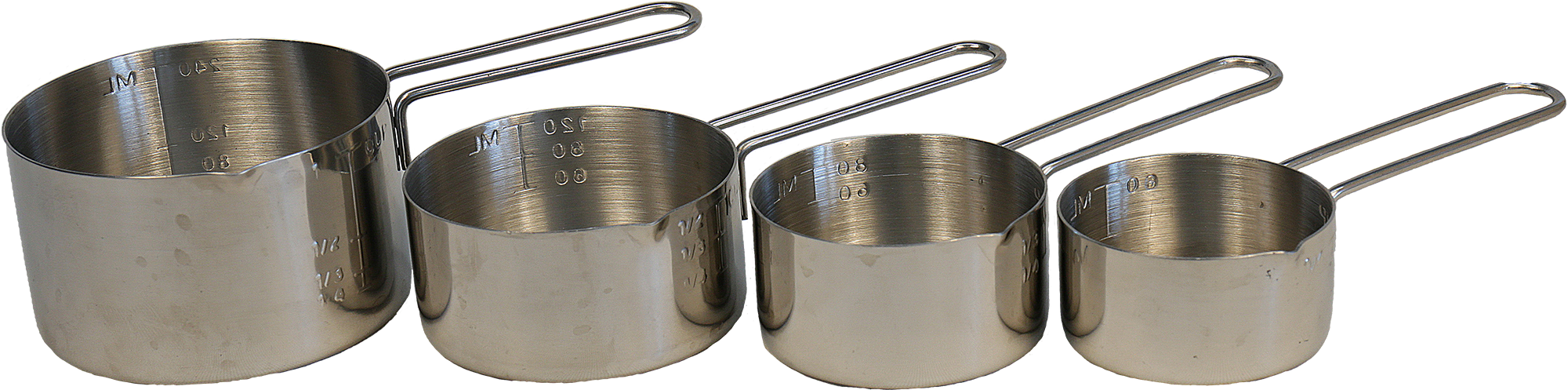
A type of service spoon that has many uses in the Bakeshop. They come in a variety of sizes and some have a point on one side or both for ease of pouring. They can be used for soups, stews, and sauces or even for creating spin sugar baskets or other sugar art. The uses are unlimited in a bakeshop but many times you will find pastry cooks using them to temper or (tempering) ingredients, such as the hot milk being ladled into the raw egg/ starch base in a pastry cream recipe, to equalize the temperature.
Disher Scoop Sizes
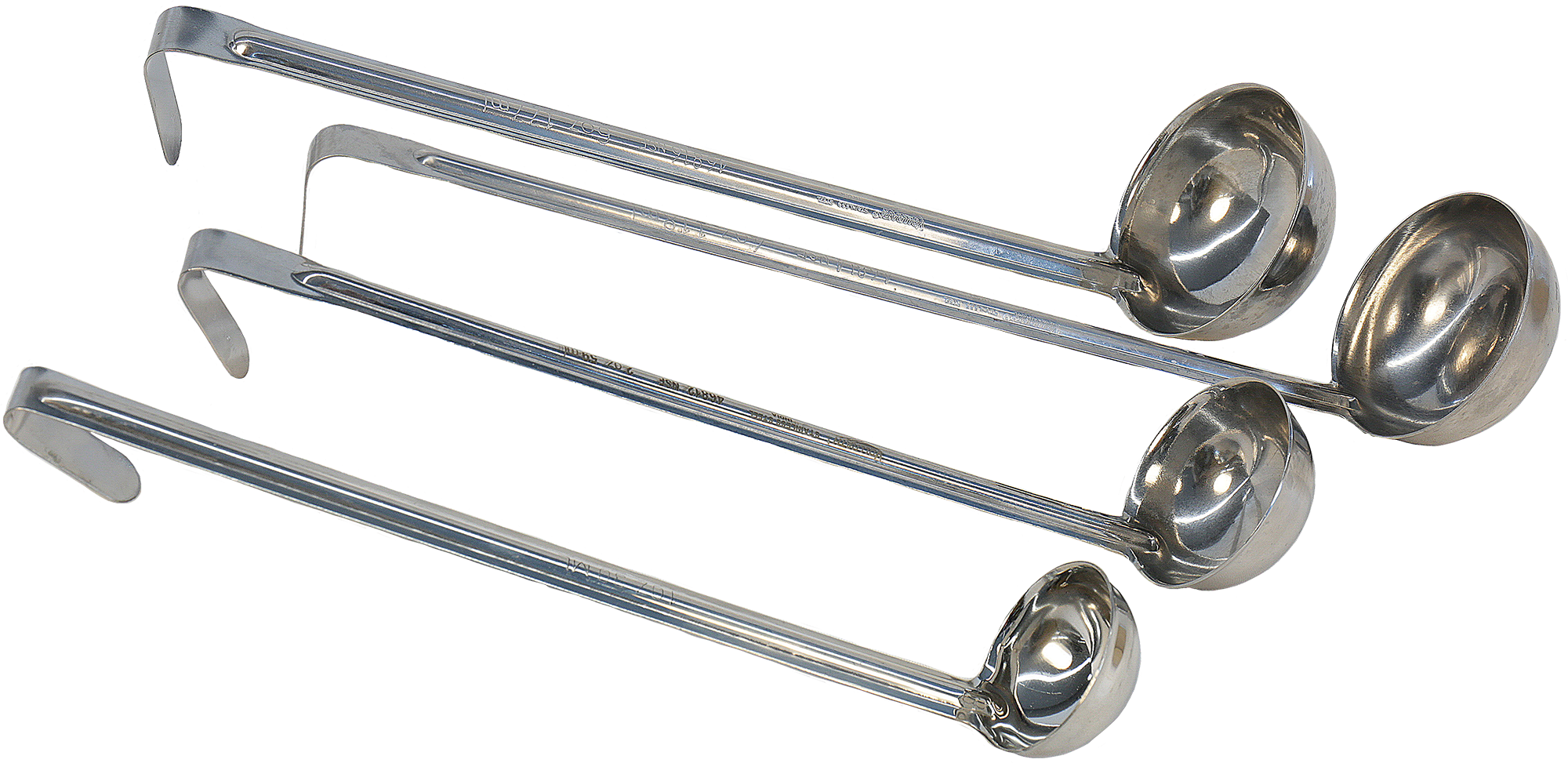
| Handle Color | Scoops per Quart | Fl.Oz. | Tsp./ Tbsp. Equivalents | Cups |
|
Yellow |
20 |
1.6 |
3 1/5 Tbsp. |
1/5 C. |
|
White |
6 |
5.3 |
10 2/3 Tbsp. |
2/3 C. |
|
Royal Blue |
16 |
2.0 |
4 Tbsp. |
¼ C. |
|
Plum |
70 |
0.46 |
2 ¾ tsp. |
11/192 C |
|
Orange |
100 |
0.32 |
1 8/9 tsp. |
17/ 432 C. |
|
Ivory |
10 |
3.2 |
6 2/5 Tbsp. |
2/5 C. |
|
Green |
12 |
2.7 |
5 1/3 Tbsp. |
1/3 C. |
|
Gray |
8 |
4.0 |
8 Tbsp. |
½ C. |
|
Black |
30 |
1.1 |
2 1/8 Tbsp. |
17/128 C. |
Dishers, Ice Cream Scoops, Scoops
In the most general terms these perform the same functions. Different retail food industries do make a clear distinction. In most commercial bakeshops scoops are used to portion finished products. Although not all manufactures produce the same, each scoop is stamped with a number. The higher the number the smaller the scoop. The number represents how many scoops it takes to fill 1 quart.