Measuring and Portion Devices
Measuring scales are used in the bakeshop for many tasks. These can be digital, spring loaded, or balanced. Some are more precise than others. They measure by the weight or mass of ingredients.
Portioning Scales
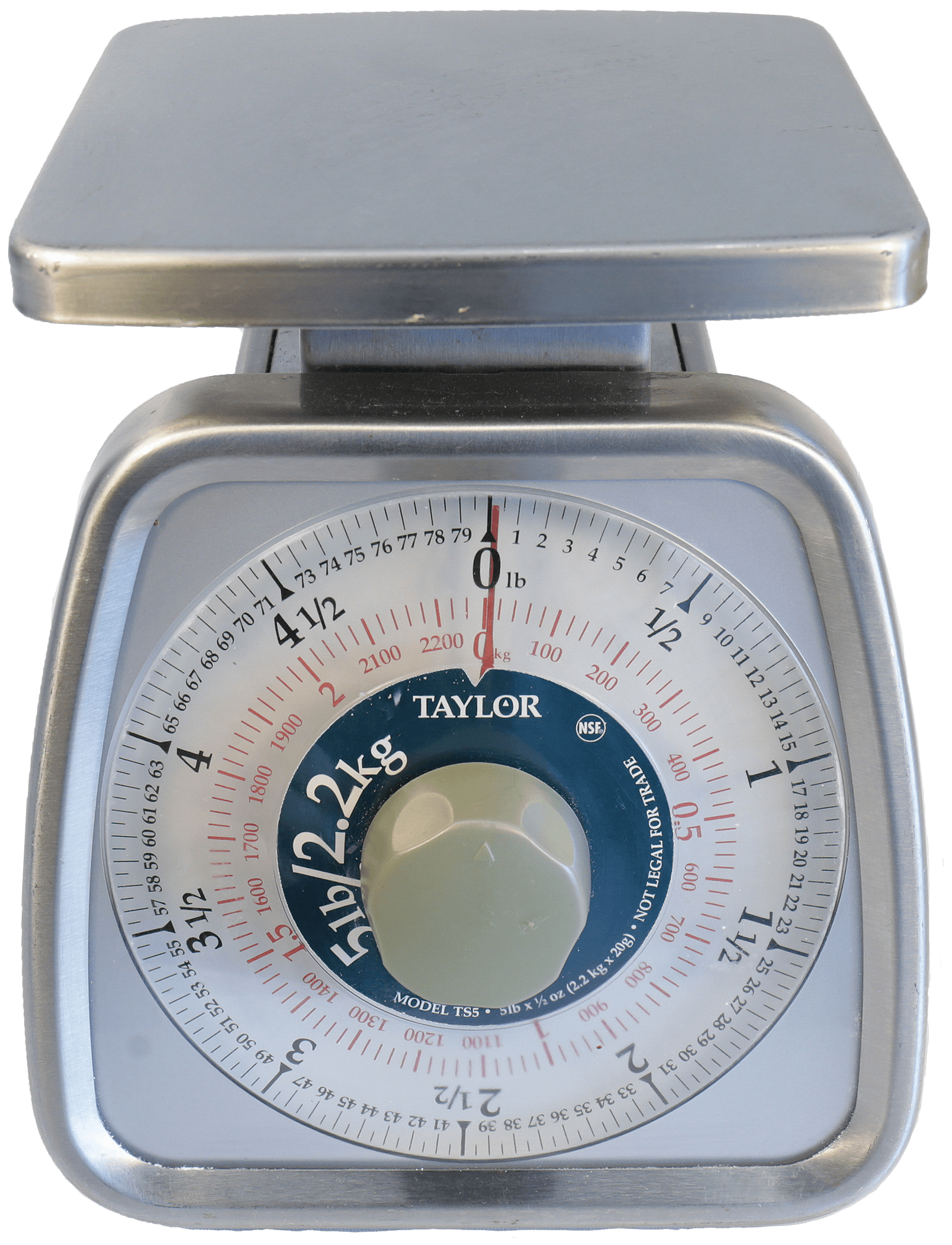
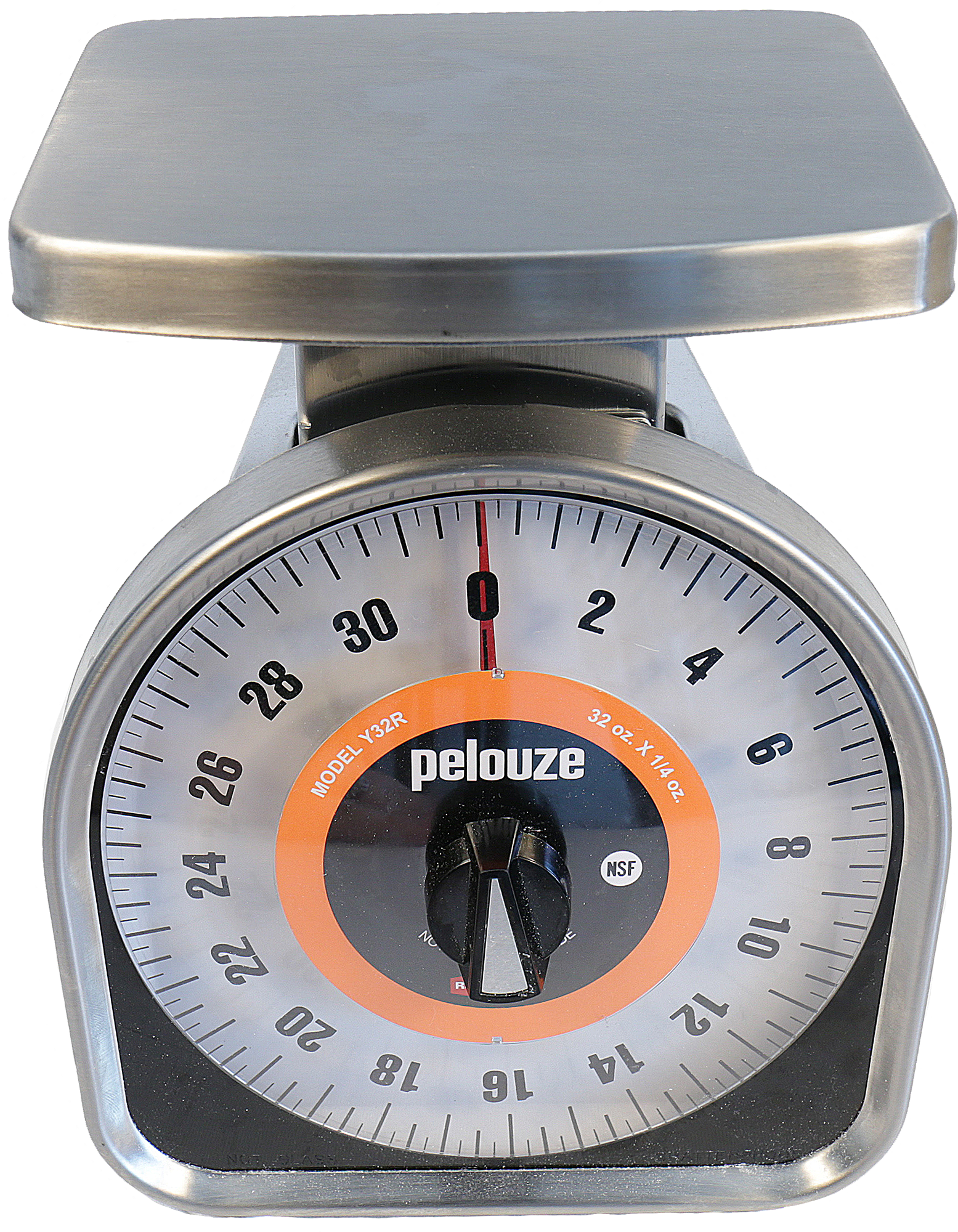
Comes with the capacity to measure in ounces, pounds, grams and kilograms. Select the capacity you need by looking at the front of the dial. For example, if the face on a scale says 5lbs/2.2kg then it has a maximum load capacity of 5 lbs., or 2.2 kilograms. It is important to know that if you are using a pound scale then each number represents 1 pound. The space between 0 and 1, for example, represents 16 ounces. If using an ounce scale then likely the space between 0 and 1 will represent ¼ ounce (.25 ounce), ½ ounce (.5 ounces), ¾ ounce (.75 ounces). Additionally, use these styles of scales when doing a task by the count, for example, 100/ 5-ounce portions of pastry cream. Scaling allows for an exact amount that adds in standardized recipes and food cost control. To use, place a holding unit on top of the scale, 6th pan or mixing bowl, then tare, or zero the scale, by turning the dial until it reads zero.
Digital Scales
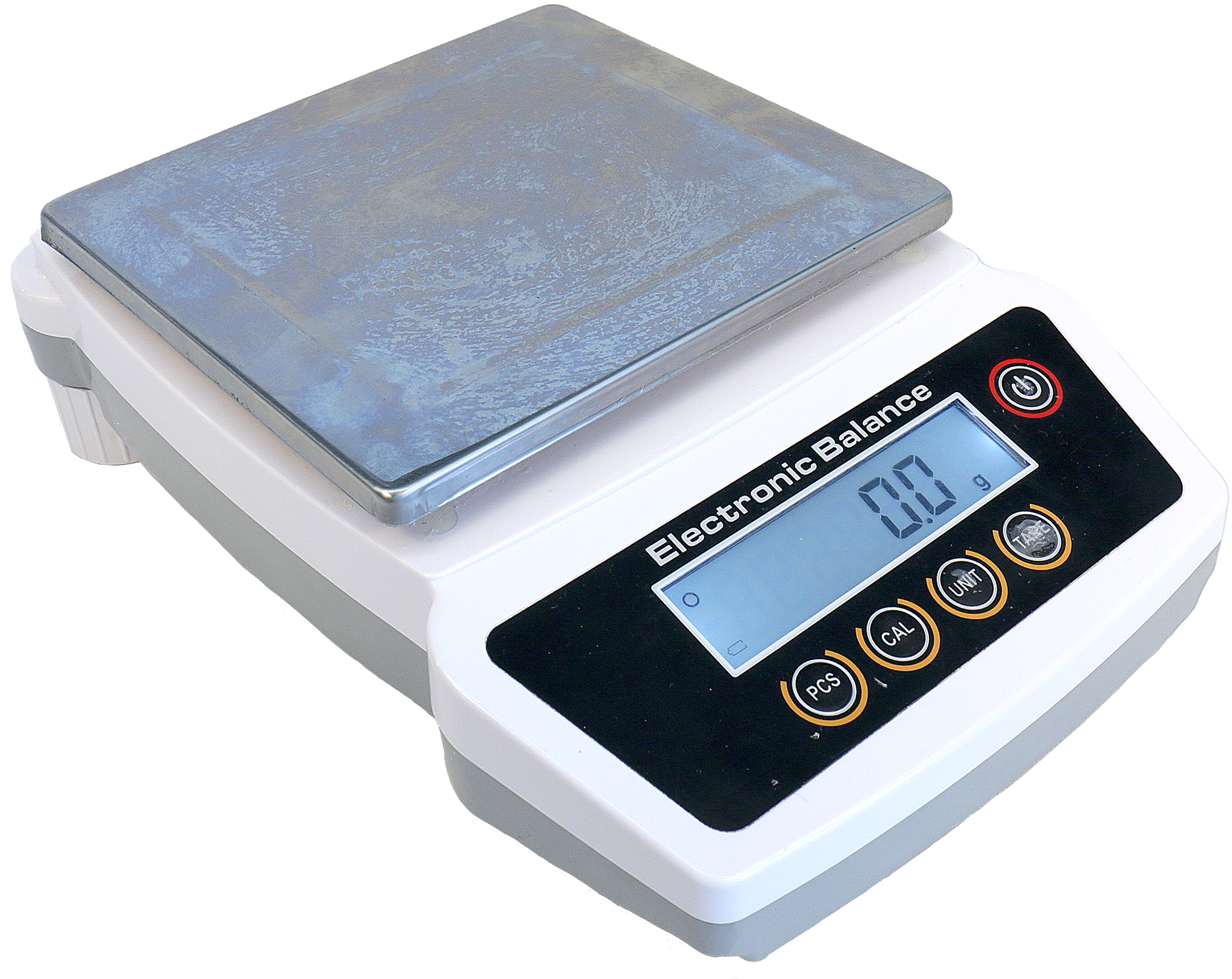
These will perform the same task as portioning scales, however, they run on battery or electricity. The advantage of using a digital scale is that they can measure much more accurately than the portioning scales. Another advantage is you can toggle between grams or ounces or kilograms and pounds.
Baker’s Balance Beam Scale
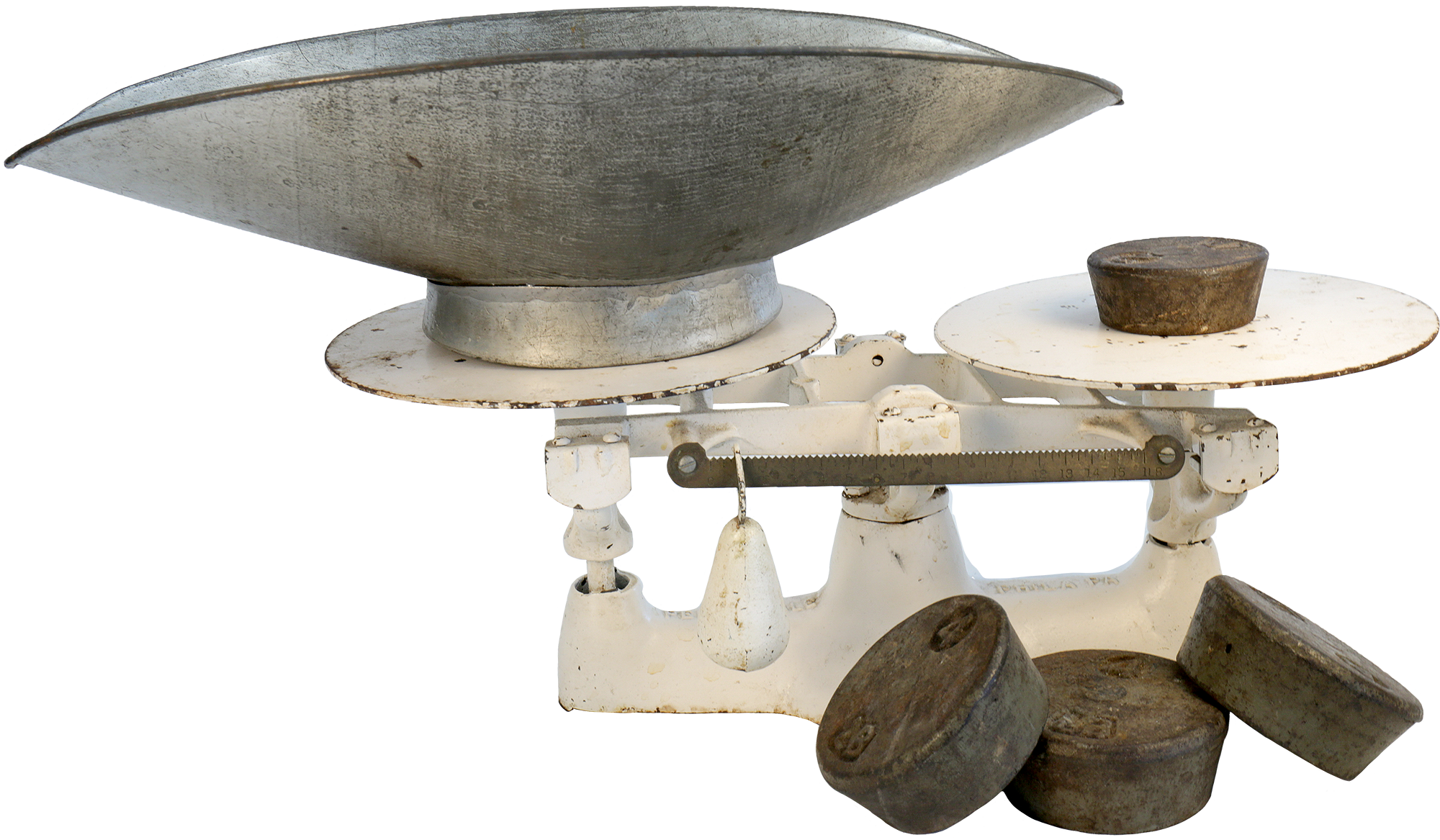
This is the baker’s old school scale. They are durable and will last if they are taken care of. They are made of cast iron, in most cases, and many are still used today. The two plates are attached at equal distance from one another on a point. Ingredients are added to one side of the scale and a known weight is added to the other side. When both sides are in balance then the desired weight has been reached.
Measuring Spoons
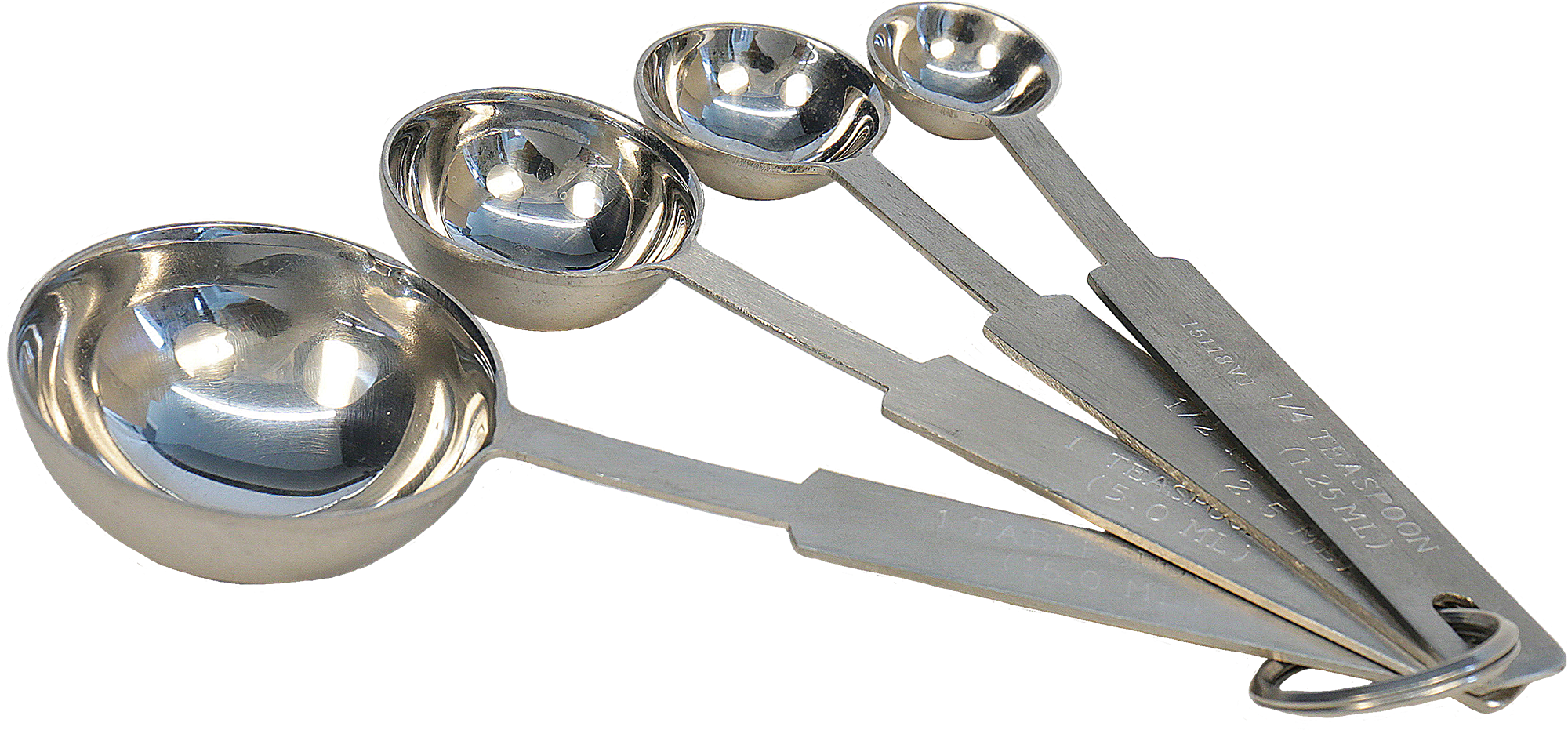
Used to measure an amount of an ingredient, either liquid or dry, in the bakeshop. They specifically measure the volume of the ingredient. The sizes can vary but the standard set will include tablespoon (Tbsp, T), teaspoon (tsp, t), ½ teaspoon, ¼ teaspoon. When 1/8 is needed then recall that it is half of 1/4th. Other more novel sets can be purchased that sizes include pinch, smidge and a dash.