Types of Pies and Tarts and the Mixing Methods Utilized to Produce Them
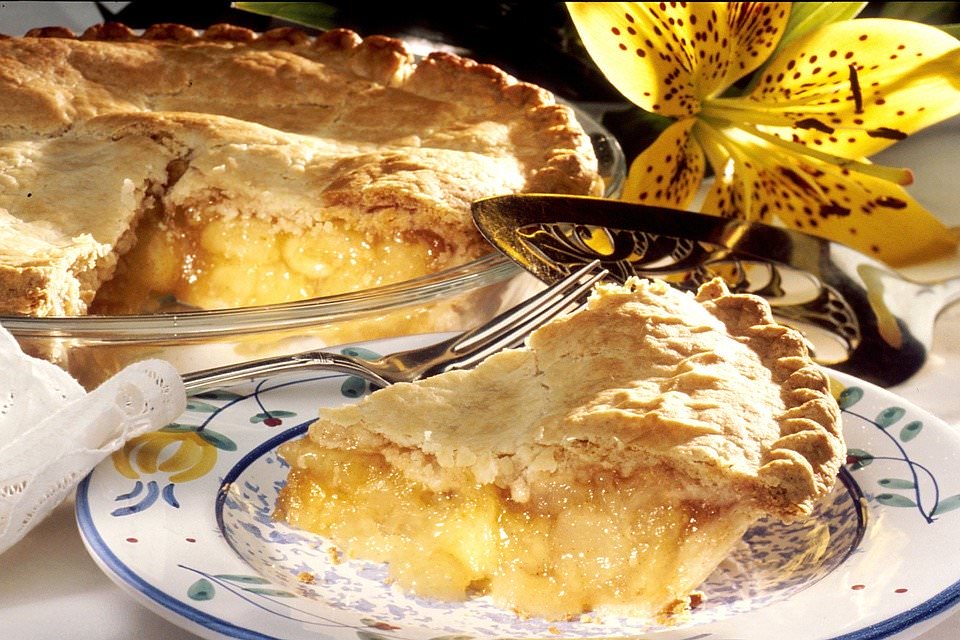
In Chapter 3 we will discuss the use of fats in the production of pie pastry. Pie crusts are made with a few simple ingredients such as flour, fats (shortening), water, and salt. The success depends on how the fat (shortening) and the flour are mixed while controlling the development of gluten. The key to making tender pie dough is following proper mixing methods and keeping the chunks of fat large/pea sized for flakiness.
Flaky and Mealy Pie Dough Demonstration
Pie crusts play an important role when making pies and tarts. While we often think of them as only a shell to hold a filling, we also need to think about how their taste and texture will pair with that filling.
Tart: defined as a single-layered base of pastry (plain or puff) with a sweet or savory filling baked in either a shallow tart pan that has straight, fluted sides and a removable bottom or a metal tart ring placed on a baking sheet. The filled tart is removed from the tart pan or ring before serving. Broadly, the term 'tart' encompasses flans, quiches, and pies. Depending on the type of tart made, they can be served as appetizers, entrees or desserts. Their size ranges from bite-size (hors d'oeuvre) to individual-size (tartlet) to full-size (tart). Sweet tarts have fillings of fruit, jams, custards, flavored creams, or nuts.
The following are examples of the two basic types of pie dough. The difference between the two doughs are the blending (cutting) of the fat with the flour. Hand mixing is best for small quantities, because you have more control when cutting the fat into the flour.
Flaky Pie Dough
For a flaky pie dough, cut/rub the cold fat into the flour until the particles of fat are the size of peas. Add the cold liquid ingredient so that the flour absorbs it and develops some gluten. A flaky dough is prepared for top pie crusts and prebaked shells. Wrap the dough with plastic wrap, flatten it into a disc, and refrigerate for at least 1 hour, preferably overnight. When the previously chilled dough is rolled out, the lumps of fat flatten and become flakes of dough separated by layers of fat.
Mealy Pie Dough
For a mealy pie dough, cut/blend the cold fat into the flour more thoroughly until the mixture resembles coarse cornmeal. Add the cold liquid ingredients and blend together to form a dough. Less liquid is needed when mixing because the flour will not absorb as much as in flaky dough. The crust is tender because less gluten is developed. A mealy dough is prepared for bottom crusts, such as baked fruit pies and custard pies. A baked mealy dough has greater resistance to becoming soggy. Wrap the dough with plastic wrap, flatten into a disc, and refrigerate for at least 1 hour, preferably overnight.
Pâte Brisée for Pies and Tarts
Pâte Brisée (pronounced paht bree-ZAY) is an all-butter pastry dough used for making pies and tarts. The baked crust has a buttery sweet flavor and a crisp texture. It is like a shortbread cookie, only in tart form. It goes well with cream fillings, fruit fillings, chocolate fillings, and even nut fillings. It is quick and easy to make, only needs 15 minutes of chilling time in the freezer, and takes under 15 minutes to bake. Use cold butter from the refrigerator and cut it into small pieces so it blends easily into the flour. The flavor of this crust comes primarily from the butter; use one of good quality. More often than not, this Shortbread Crust is prebaked. Common practice is to bake-blind: line and fill the unbaked pastry crust with pie weights or rice before baking to prevent the pastry from shrinking and puffing up. Eliminate this step by putting the unbaked pastry crust in the freezer for 15 minutes. This sets the crust, which prevents these problems. Bake the pastry at a high temperature until golden brown, about 13-15 minutes. Once baked, 'seal' the crust. This 'sealing' prevents the tart filling from softening the crust over time. You can spread a thin layer of warmed apricot glaze, or even melted chocolate, over the pastry once it has completely cooled. The unfilled baked pastry crust can be covered and stored for a few days before filling.
Pâte Sucrée or Sweet Tart Dough for Pies and Tarts
Sweet tart dough (pâte sucrée) is a non-flaky dough used for sweet tart shells. The dough is sturdier because it contains egg yolks and the fat is cut into the flour thoroughly. Therefore, less gluten develops, making for a tender dough when baked. The tart dough is a rich and sweet pastry with a crisp cookie-like texture. Once made, this pastry can be stored in the refrigerator for several days. A sweet pastry crust is ideal for making both large and small sized tarts, especially those filled with fruit and/or cream. A sweet pastry crust adds a little more sugar and an egg to the basic pie crust dough, giving the pastry a sweeter flavor and a softer texture. This sweet pastry crust is prebaked. Common practice is to bake-blind: line and fill the unbaked pastry crust with pie weights or rice before baking to prevent the pastry from shrinking and puffing up. Eliminate this step by putting the unbaked pastry crust in the freezer for 15 minutes. This sets the crust, which prevents these problems. Gently prick the bottom of the pastry before baking, which also prevents the pastry from puffing up. Bake at a high temperature for five minutes to set the crust, then lower the oven temperature and bake the pastry until firm, dry, and lightly golden brown. Once baked, 'seal' the crust. This 'sealing' prevents the tart filling from softening the crust over time. You can do this immediately by brushing the still warm crust with a little beaten egg white. Alternatively, you can spread a thin layer of warmed apricot glaze, or even melted chocolate, over the pastry once it has completely cooled. The unfilled baked pastry crust can be covered and stored for a few days before filling.
Crumb Crust
Crumb crusts are for desserts such as cheesecakes, unbaked cream pies, chiffon pies, and ice cream pies. Crumb crusts are made with graham cracker crumbs, flavored cookie crumbs, and/or groundnuts. Baking a crumb crust before filling it makes for a firmer and less crumbly crust and gives it a toasted flavor.
For example, graham cracker crust combines graham cracker crumbs with a little sugar and melted butter. Press this mixture into individual tart pans and leave to chill while you make the decadent filling of cream cheese, melted white chocolate, and sour cream. Suggestion: pipe the cream into the chilled shells.
Important Steps to Review in Preparing a Prebaked Pie Crust
There are a few things to keep in mind when preparing a prebaked pie crust:
- Use very cold butter and shortening. Cut the butter and shortening into small pieces and freeze it for about 15 minutes.
- When you add the ice cold water, do it one tablespoon at a time, and process (pulse) just until the pastry is moistened (when you press a little between your thumb and index finger, it just holds together). It should not be a solid ball of dough.
- Gather the pastry into a flat disk, cover with plastic wrap, and refrigerate until firm (about 30-60 minutes). Chilling the pastry makes it easier to roll out and prevents it from shrinking as it bakes.
- Lightly flour your countertop, rolling pin, and sprinkle a little on the top of dough. If you find the pastry tearing, it may be too cold, so just let it sit at room temperature for a few minutes to warm up. If the pastry sticks, it may be too warm, so return it to the refrigerator for 5 to 10 minutes.
- Roll the pastry from the center outwards, lifting and turning the pastry every so often to ensure it is not sticking and is of even thickness (about 1/8 inch).
- Once the desired size, gently roll the pastry around your rolling pin and unroll it on top of your pie pan. Gently press the pastry onto the bottom and up the sides of the pan. Do not stretch the pastry, as this will cause the pastry to shrink during baking.
- To prebake the piecrust, first chill the crust while you preheat the oven.
- The following steps will prevent the pastry from puffing up during baking. Prick the bottom of the crust with the tines of a fork. Lightly butter (or spray with a nonstick vegetable spray) a large round of parchment paper or aluminum foil, and place it, buttered side down, onto the pie crust.
- Fill with pie weights, beans, or rice and bake the crust for about 15 minutes or until the sides of the pastry have started to brown. This sets the crust (called a partially baked piecrust).
- Remove the parchment paper and weights, and return to a 375 degree F (190 degree C) oven for another 10 minutes or until the pastry is dry and nicely browned. Remove from oven and let cool. If you want to seal the pastry, lightly beat one large egg white with a pinch of salt, and brush it over the hot pastry. Your prebaked piecrust is now ready!
Prebaked Pie Crust Recipe Demonstration - Joyofbaking.com