Types of Frostings (Icings) and Their Uses
Buttercream
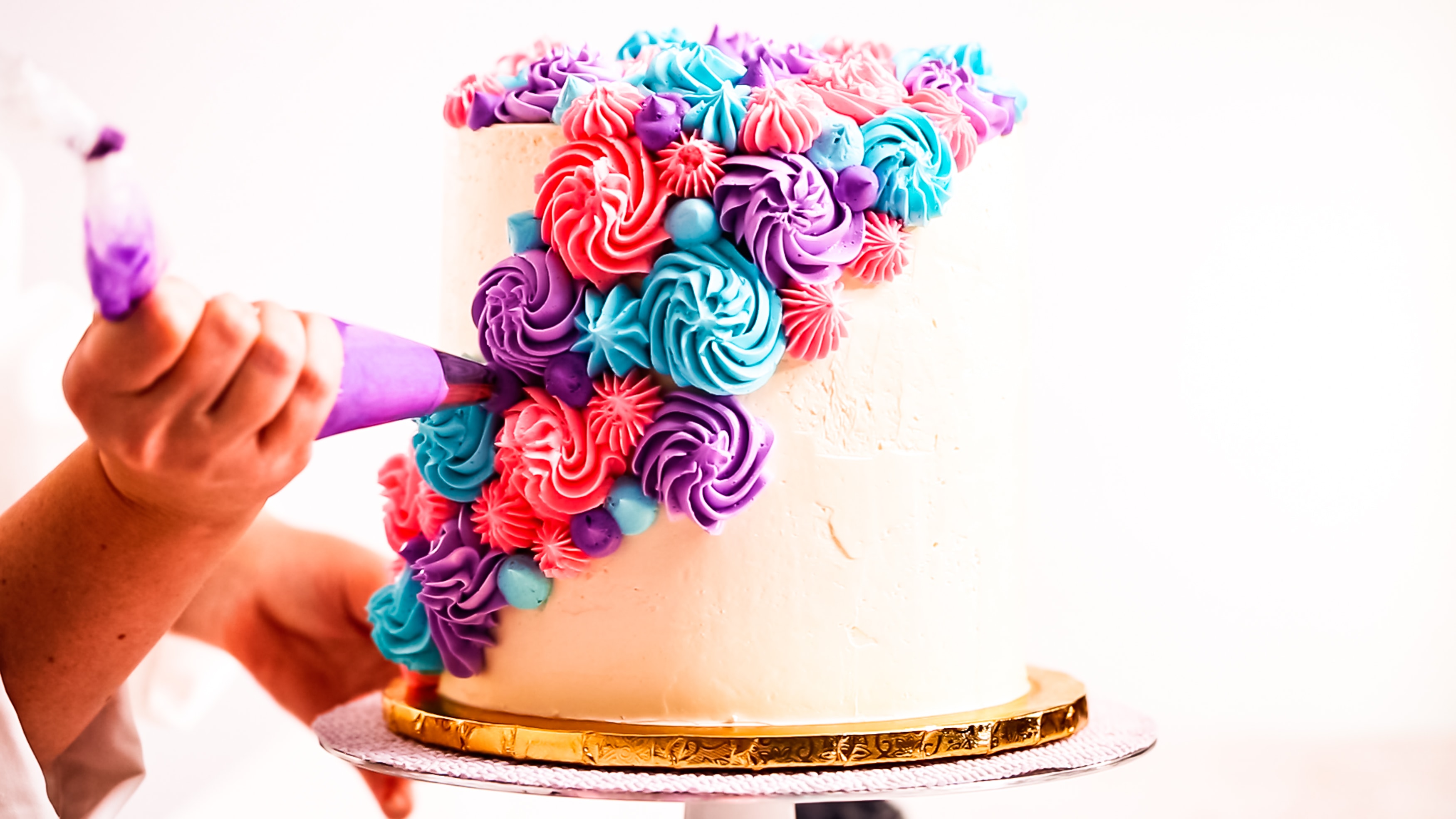
Buttercream is a name that encompasses a broad range of icings that can differ by person, city, region, or country. They can be quick or complicated to make depending on whether they are cooked or uncooked. Buttercreams may contain powdered sugar, white granulated sugar, whole eggs, egg whites, egg yolks, unsalted butter, shortening, milk or cream, pastry cream, fondant, and various flavorings (extract, puree, chocolate, and liqueur). Generally, buttercream is a light and creamy smooth icing used to fill, frost and decorate (flowers, leaves, etc.) all kinds of cakes and pastries. Some cooked Buttercreams are meringue-based where unsalted butter beaten into firmly beaten egg whites that have had hot sugar syrup added to them. This produces a rich, yet light buttercream. French Buttercream contains both whole eggs and egg yolks beaten, to which a sugar syrup and unsalted butter are added. Confectioners' Frosting is an uncooked buttercream icing that contains powdered (icing) sugar, unsalted butter, milk and flavoring.
Ganache
Ganache is both a frosting and a glaze and is widely used in the pastry kitchen. Barely warm and liquid ganache is poured over a cake or torte for a smooth shiny glaze. If cooled to room temperature it becomes a spreadable filling and frosting. Refrigerated ganache whipped for fillings, frostings, or formed into truffles. Whipped Ganache soft butter called ganache beurre, which is like a buttercream, and used for fillings and frostings for cakes.
Ganache Recipe Demonstration - Joyofbaking.com
Royal Icing
Royal Icing traditionally used to ice Wedding and Christmas cakes, consists of powdered (icing) sugar, egg whites or meringue powder and water. If you are worried about salmonella, use the royal icing recipe that contains meringue powder, not raw egg whites. This pure white icing when dry produces a perfectly flat, smooth and glossy hard surface, which makes it ideal for frosting cakes and cookies, and for intricate piping of decorations (flowers, borders, lettering, etc.) You may have to adjust the water and sugar used depending on whether you are using the icing for decorations (fine lines, outlines, etc. needs a thinner icing) or to coat cakes or cookies (thicker icing).
Royal Icing Recipe Demonstration - Joyofbaking.com
Whipped Cream Frosting
Whipped Cream Frosting is a great recipe that is used to fill and frost any type of butter or foam cake. Cocoa powder added to make chocolate whipped cream or raspberry puree added for a wonderful fruit flavored whipped cream. Whipped Cream Frosting makes the perfect whipped cream that will keep in the refrigerator several hours without separating. You can use it as a filling for cakes, as a frosting, you can pipe it, or simply as an accompaniment to a slice of pie, a bowl of fresh fruit, or to garnish a pudding. I have included recipes for vanilla flavored whipped cream (also called Chantilly Cream), raspberry, strawberry, lemon, chocolate, and even a mocha flavored whipped cream.
The trick to making Whipped Cream Frosting is to have the cream, the bowl, and the wire whisk very cold, as this will help the cream reach its maximum volume when whipped. It is best to use a metal bowl and place it in the freezer, along with the wire whisk, for at least 15 minutes. Now, you need to use heavy cream, also known as heavy "whipping" cream (outside the U.S. it may have a different name). This is cream with a butterfat content of between 35 - 40%, which means it will double in volume and reach stiff peaks when beaten. When beating the cream, add it to the cold bowl, along with the vanilla and sugar. (I like to add the smaller amount of sugar to start as you can always add more if needed.) Start the mixer at low speed and gradually increase the speed to high. Depending on what you are using the cream for, beat just until soft or stiff peaks form. Watch carefully, because it is very easy to beat the cream until it almost turns to butter. If you do accidentally over beat, just add a little more cream and beat until soft or stiff peaks form. If you do plan to store the whipped cream in the refrigerator you will find that eventually, it will separate. If that happens, simply rewhip. If you want to stabilize the cream so it will not separate when stored, take about 1 teaspoon unflavored gelatin and sprinkle it over 1 tablespoon cold water. Let it stand about 5-10 minutes or until it has softened and swelled (bloom). Then heat it gently (I do this in the microwave in 5 second intervals) to dissolve the gelatin. Then whisk it into the softly whipped cream.
Cream is the fat, that rises to the top of whole milk and it has a smooth, satiny texture. Labeled either: "pasteurized”: or "ultra-pasteurized". Most creams that you buy today are ultra-pasteurized, which is cream that is made by briefly heating the cream to around 300° F (150°C) to kill the bacteria that can cause it to sour. It has a much longer shelf life than pasteurized creams. Keep in mind that not all brands of heavy creams taste the same and since cream is the main ingredient in this recipe, you want to use the highest quality that you can afford. Also, use the amounts of sugar and vanilla extract as a guide, adjusting them to your own personal taste. For the raspberry and strawberry whipped cream, you can use either jam (or preserves) or sauces (purees).
Whipped Cream Frosting Recipe Demonstration - Joyofbaking.com