Understanding the Ingredient: Chocolate
The homeland of chocolate is South and Central America. When the Spanish colonized Mexico, they kept chocolate a secret for some 100 years. The Spanish then took it to West Africa, and this region now produces two-thirds of the world’s chocolate. Chocolate has always had the reputation of a narcotic and an aphrodisiac, and today it still conjures up images of temptation and indulgence.
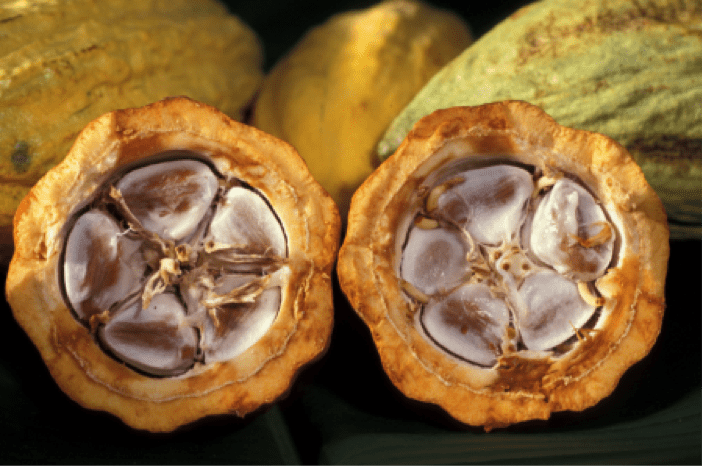
Like most tropical fruit trees, the cocoa tree blooms, buds, and produces fruit all at the same time. The tree can grow to approximately 8 m (26 ft) high. Its fruit is a melon-like pod with approximately 50 to 60 kernels inside (each the size of a lima bean). The ripe fruit is taken off the tree and kept until completely ripe (approximately four days). Then the fruit splits open.
Magnets take out metallic parts, and then sand, dust, and other impurities are removed from the cocoa beans. Some starches are changed into dextrins in the roasting process to improve flavor. Machines break the beans and grind them fine until a flowing liquid is produced, called chocolate liquor. Through hydraulic pressure, cocoa butter is reduced from 55% to approximately 10% to 24% or less, and the residue forms a solid mass called a press cake.
The press cake is broken, pulverized, cooled, and sifted to produce commercial cocoa powder. The baking industry uses primarily cocoa powders with a low fat content. At the factory, chocolate is subjected to an additional refining step called conching, which has a smoothing effect. The temperature range in this process is between 131°F and 149°F. Sugar interacts with protein to form amino sugars, and the paste loses acids and moisture and becomes smoother.